

CASE STUDY:
EO Regional Workforce and Child Development Hub
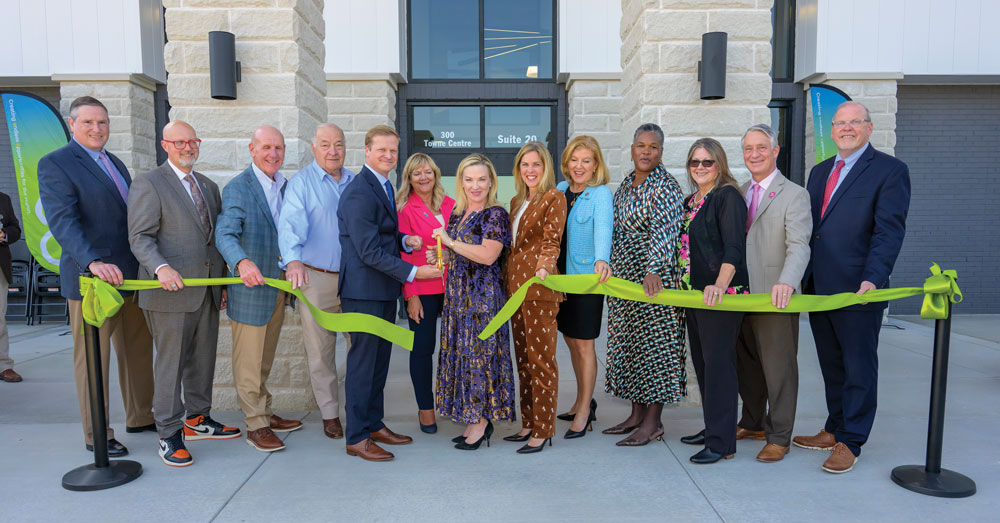
 In the fall of 2024, the massive 87,000 square-foot EO Regional Workforce and Child Development Hub opened in Abingdon, Virginia. The complex operates as a Hub-and-Spoke Model where a centralized, high-capacity facility works with a network of community-based providers to expand access, strengthen quality, and improve sustainability across the region. The Hub is the regional epicenter of early care and education, housing the Ballad Health Center for Early Learning; Career Commons, a workforce and career simulation center that includes early childhood education; and a shared services alliance that provides business coaching and back-office support for child care businesses across the region. By anchoring innovation, workforce development, and shared services in the Hub while supporting delivery through local “Spokes,” the model creates a coordinated system that drives both economic mobility and early childhood outcomes.
Funded through a capital stack derived primarily from private sources, the EO Regional Workforce and Child Development Hub is an adaptive reuse project that repurposed a building that was once a Kmart. The Hub couples child care with workforce development to address the region’s low labor force participation rate, provide residents with a path to higher paying jobs, and support employers in recruiting and retaining workers.
The Hub is an excellent example of how public, private, and philanthropic partners can come together to address critical community needs, and how child care is an essential piece of the solution when seeking to invigorate a regional economy.
How it started
For years, Southwest Virginia has been a “child care desert,” lagging behind other parts of the Commonwealth in the supply of licensed early care and education. While this capacity issue plagued the region prior to the onset of COVID, the pandemic caused additional disruption to an already weak market. The region worked hard to support and stabilize child care providers using federal COVID-19 relief dollars, but the area emerged from the pandemic with even less child care capacity, further weakening a child care market that was already not meeting the demand.
The pandemic became a tipping point for the child care issue in the region, with employers and public officials becoming increasingly concerned about the capacity crisis and its impact on the regional economy. As workers attempted to reenter the workforce after the pandemic, child care was a significant barrier. With interest growing among policymakers and business leaders, and federal funding available to help with the pandemic recovery, a window emerged to make a significant child care investment in the region.

EO Companies (EO), a non-profit organization dedicated to strengthening communities by expanding education, building the workforce, and investing in community assets that support economic growth and improve quality of life, recognized this window and seized it. The favorable conditions led them to ask a bold question: What kind of investment could permanently change the child care landscape while also supporting the regional workforce through the recovery from COVID?
The answer was the EO Regional Workforce and Child Development Hub, a centrally located facility that could anchor child care services, support employers, and strengthen the early childhood workforce not only in the short term, but for years to come.
The collaboration that made it work
The EO Regional Workforce and Child Development Hub was a complex project, bringing together government, business, and philanthropic organizations to fund the project; architects and contractors to design and build the structure; and operators to deliver the services. The key players that brought the project to life included:
Travis Staton, President and CEO of EO, was the overall driver of the project. Travis and his colleagues coordinated all aspects of the work, including raising the funding for the capital stack, managing the build, and recruiting a child care operator and establishing workforce development programs within the finished building. Mr. Staton and his team worked as conveners, strategists, and coordinators for every phase of the project.
Senator Todd Pillion, Delegate Terry Kilgore, and the other members of the legislative delegation that represent Southwest Virginia were instrumental in ensuring that an initial $3.5 million in federal American Rescue Plan Act (ARPA) dollars were directed toward the project through the Virginia Department of Education. While the ARPA funding ultimately could not be used for the construction of the Hub, it became the catalyst for the capital raise. The ARPA funding was, and continues to be, instrumental in supporting the operational costs of the site.
Amanda Pillion, Mayor of Abingdon from 2023-2024, was an important champion of the Hub, ensuring that the town was supportive of the project.
Steve Smith, President and CEO of Food City, was the project’s largest financial contributor. Mr. Smith owned the Kmart property and was a critical supporter of repurposing the building into the Hub. He provided $7.85 million of the $26.5 million needed to finance the construction.
Ballad Health was an early funding partner who recognized the need for child care to recruit nurses and other staff for its hospital in the region. Ballad was considering the development of their own child care center, but EO encouraged them to partner on a larger project that would create economies of scale and serve the broader community. Ultimately, Ballad Health invested $4 million in the community-wide project.
WellSpring Foundation of Southwest Virginia was another important early contributor. The workforce and child care goals of the Hub directly aligned with its mission, and were responsive to the findings of a community needs assessment the Foundation conducted that found that the lack of child care was a major factor in the loss of young talent in the region.
What was achieved
The EO Regional Workforce and Child Development Hub is a huge, inspiring complex that co-locates child care and workforce development to expand child care capacity, support working families, build regional talent including new educators, and serve as a model for rural communities across Virginia and beyond. There were five key achievements of the project:
- The Ballad Health Center for Early Learning:
A 25,000 square foot child care center with an additional 10,000 square feet of outdoor space that has the capacity to serve 300 children. The Center is open 13 hours a day—from 6am to 7pm— to support nurses and other workers in the region that work long shifts. - Career Commons:
A hands-on career exploration center for PreK-12 students that allows them to experience a career by performing job-related tasks. The Virginia Department of Education’s Career Resource Center has organized career and technical education programs and curricula into clusters (agriculture, finance, education, etc.) and each of these clusters is represented in the Career Commons. - A career and technical education (CTE) lab:
Junior and senior high school students from four area schools commute to the Hub to receive CTE training in early care and education. The students attend courses at the Hub and do their fieldwork in the early learning center. Students are dually enrolled in local colleges and receive college credit toward a degree in early care and education. - Early Childhood Education Career Pathways program:
Recruiters actively engage with child care centers and high school and community college students to enroll students in the ECE Career Pathways program. The program provides 27 hours of on-line training aligned with child care licensing requirements and works with providers to streamline hiring processes. A recent evaluation found that the program supported 55 child care centers; recruited, trained, and placed 221 new teachers; and upskilled 320 current teachers within 18 months. As a result, child care programs were able to expand and establish new sites to serve 297 additional children. - EO Shared Services Alliance:
Business coaching and back-office supports such as accounting, payroll, and human resources offered to child care providers in the region. These services allow child care providers to operate at maximum capacity, reduce costs, increase revenue to support the sustainability of their business and focus more intentionally on improving quality.
Barriers that remain
While the EO Regional Workforce and Child Development Hub is improving the region’s child care infrastructure, barriers remain. These include:
Getting the math right
From the onset, EO had to make assumptions about how many children would be served at the Center, the ages of those children, and what they would charge families in order to achieve a sustainable business model. Classrooms with four-year-olds generate more revenue than infant and toddler classrooms because child care regulations allow more four-year-olds per adult than younger children. Accordingly, the Center’s business model is based on serving a larger number of four-year-olds, so that these classrooms generate enough revenue to allow the Center to serve infants and toddlers. However, programs across the region all do the same math, so care for four-year-old is the most readily available form of care in the region. While full four-year-old classrooms are needed to make the Center sustainable, there is competition for these children from other programs that receive Head Start and Virginia Preschool Initiative funding. This fact makes it more difficult to be fully enrolled. The ARPA funding initially provided to support the project continues to cover the shortfall in operational costs.
Staffing
Operating a 13-hour center makes staffing challenging, and low staff-to-child ratios of the infant and toddler classrooms means that the Center requires a large number of teaching staff. Given this challenge, the Center employs a “Grow Your Own” model utilizing the early childhood educator workforce development program administered by the Hub to train staff that will be employed in the Center.
Waitlist for subsidy
The Southwest region has a waiting list for child care subsidies, and with the increased supply of high-quality care creating demand for more expensive care, the waitlist continues to grow. Many families in the region cannot afford what the Center must charge to be a sustainable business, and the lack of availability of a subsidy causes the Center to be underenrolled.
Lessons for other communities
The success of the EO Regional Workforce and Child Development Hub offers an amazing example of what is possible, and several lessons can be taken from the process. These include:
What’s next?
Given the success of the project, EO is now consulting with leaders in other communities who are interested in developing similar facilities. Through consulting and technical assistance, they are sharing lessons learned—both positive and challenging—related to facility construction, financing, staffing models, and operational sustainability.
Finally, a long-term dream is to document the outcomes for children by following them from the time they enter the Center, through K-12, and into a career. This research would provide evidence for the concept that starting early and fostering children through their educational journey results in success in life and a high-paying career.